

Rare and WTW
Financing Reef Resilience in the Caribbean
Key Details
Project Lead: Caribbean Biodiversity Fund (CBF)
Supporting Partners: MARFund, WTW, National Conservation Trust Fund of Jamaica (Jamaica), Saint Lucia National Conservation Fund (Saint Lucia), St. Vincent and the Grenadines Conservation Fund (St. Vincent and the Grenadines)
Financial Support: The Government of Canada
Location: Jamaica, St. Lucia, St. Vincent and the Grenadines, and the Dominican Republic
Project Timeline: Completed (2025-2026)
Summary
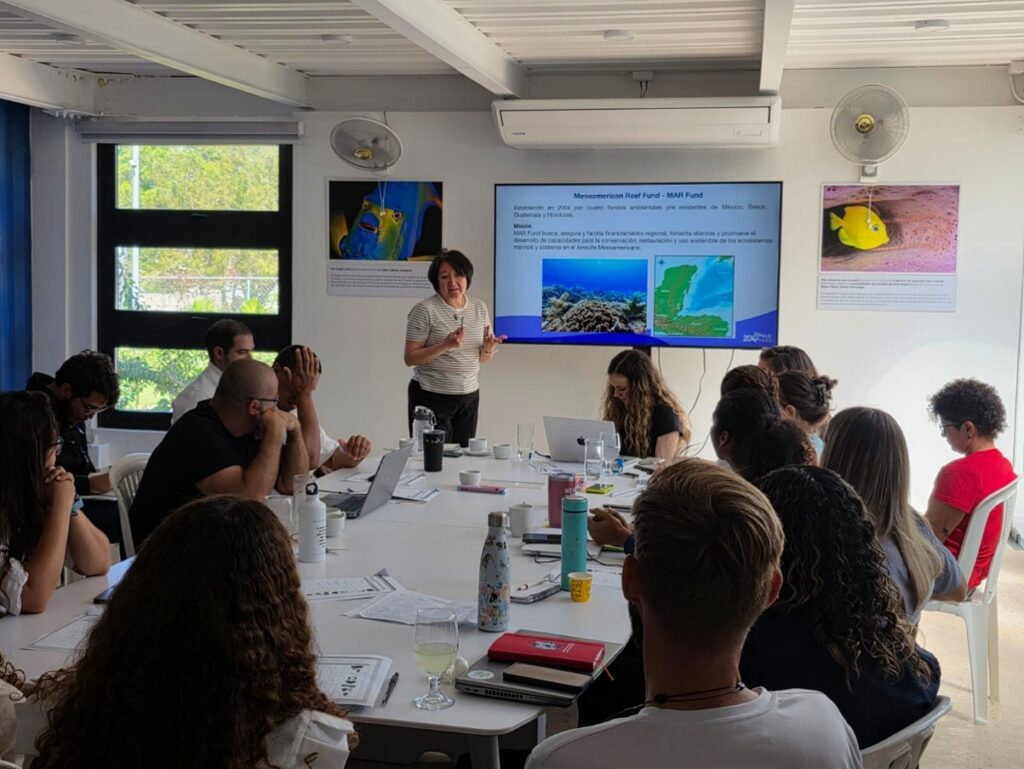
In the Caribbean, where coral reefs provide vital protection from extreme weather while supporting local livelihoods, our partners are working together to strengthen how coastal communities prepare for and respond to Ocean-related risks exacerbated by climate change. The Caribbean Biodiversity Fund (CBF), in close partnership with the National Conservation Trust Funds (NCTFs) of Jamaica, Saint Lucia, St. Vincent and the Grenadines, and the Dominican Republic, is developing an insurance product designed to fund rapid response actions following storm-related damage to coral reefs.
ORRAA support is contributing to key elements, including the assessment of regional insurance partners, the extension of coverage to additional sites, the training of reef brigades in preparation for future storms, and the establishment of a long-term financing strategy.
Through this project, the CBF is putting people, skills, and finance in place before a tropical cyclone strikes, so that coastal communities can rapidly recover local reef ecosystems, ensure their ongoing protection of vulnerable shorelines, and sustain the fishing and tourism activities that so many households depend on.
Challenge
Coastal communities in the Caribbean are increasingly threatened by extreme weather, increasingly amplified by climate change. In addition to the destruction of property and infrastructure, severe storms can devastate coral reef ecosystems, which provide vital protection from flooding and coastal erosion while also sustaining fisheries and tourism industries that underpin their local economies.
The heightened vulnerability of coral reefs threatens to wipe out people’s livelihoods, reduce food security, and strain regional economies, and yet emergency planning rarely incorporates reef recovery efforts. Responsibilities are scattered across different actors, and pre-positioned funding mechanisms are not set up, limiting the speed of response to extreme weather.
Solution
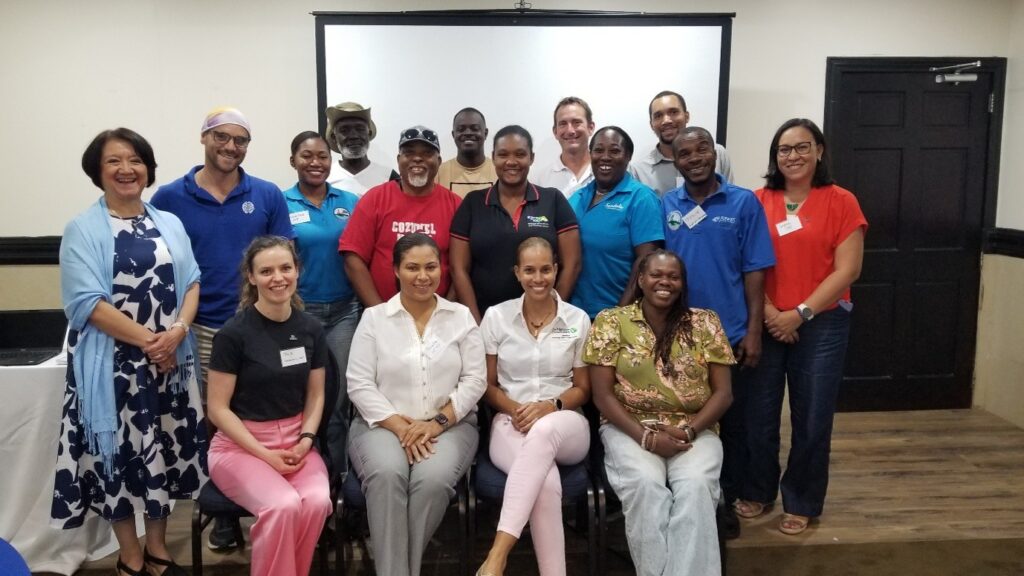
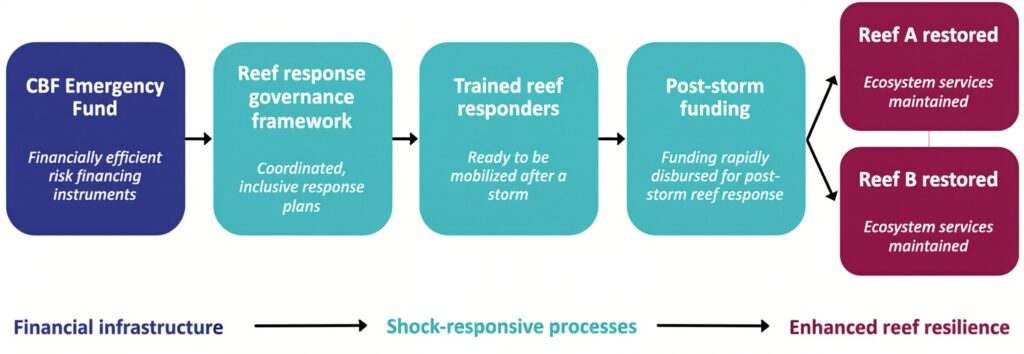
The CBF is supporting the creation of local governance structures, empowering local leadership, and enhancing capacity to develop and implement integrated reef-response efforts as quickly as possible after a storm. Alongside this, the project is developing a parametric insurance mechanism that would trigger rapid payouts following hurricane impacts. Beginning with pilots in Jamaica, Saint Lucia, St. Vincent and the Grenadines, and the Dominican Republic, the project assessed potential insurance partners and mechanisms, forged local partnerships, and developed a portfolio of training and awareness materials for different stakeholders across the Caribbean.
Previous work highlighted three pillars that are essential to reef response in the wake of extreme weather: locally-led and endorsed response strategies, suitably trained and well-equipped responders, and having financial flows in position for as soon as they are needed. CBF is working alongside partners to aid the NCTFs of the target countries in engaging their national authorities, marine managers, conservation practitioners, and local communities and businesses. In doing so, they will support the creation of contextually tailored frameworks for the governance of reef response.
The project offers a model that the CBF can continue to scale as new funding becomes available, extending its reach to build the resilience of reef ecosystems and coastal communities in the Caribbean. This type of solution can be replicated and embedded in national climate and disaster risk management plans, policies, and frameworks across the region. The extensive CBF network will be a key vehicle for scaling, with other countries already indicating their interest in joining the reef risk financing program that will be operationalised through this project.