

Protecting coastal communities from climate-related income loss
Key Details
Project Lead: Rare
Implementation Partners: Philippines – Willis (WTW business); Kenya – Global Parametrics and AB Entheos
Financial Innovation: Insurance
Financial Support: The Government of Canada and The UK’s Blue Planet Fund
Location: Philippines; Kenya
Project Timeline: Philippines design and launch 2021-2025; Kenya feasibility 2026-2027
People Supported: Philippines (58,281)

Summary
In an era of increasing climate volatility where the livelihoods of small-scale fishers are at risk, ORRAA member Rare worked with Willis, a WTW business, and the Government of the Philippines to develop and deploy a pioneering solution: the world’s first weather index-based parametric insurance product tailored to small-scale fishers in the Philippines.
Based on the successful pilot and incorporating key lessons learned, Rare, together with Global Parametrics and AB Entheos, is working to replicate the product in Kenya.
The insurance covers lost income from prolonged adverse weather that makes fishing unsafe. When storms or rough seas keep boats tied up, small-scale fishers lose their daily income. The new insurance product changes the equation by paying fishers to stay safely at home when conditions are too dangerous, helping families and reducing pressure on already stressed marine resources.
Challenge
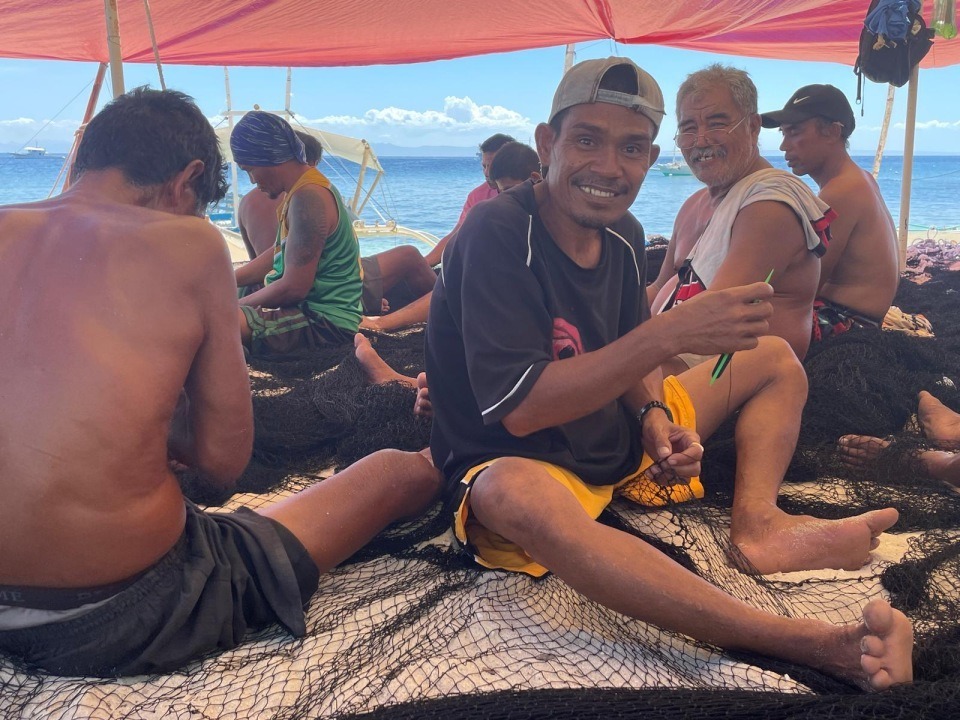
Climate change is disrupting weather patterns, making storms more intense and fishing seasons harder to predict. When fishers are forced to stay ashore during repeated stretches of bad weather, it can add up to the loss of an entire month’s income, often without a financial safety net. Many fishers then turn to high-interest loans, selling critical assets, or overfishing to make up for losses.

Solution
To help fishers cope with income losses from bad weather, ORRAA partners, Rare and Willis, in collaboration with the Government of the Philippines, developed a weather index-based parametric insurance product that reflects the actual conditions small-scale fishers face at sea.
This index combines three key factors – wind speed, wave height, and rainfall – into a single trigger for insurance payouts. The advantage of this system is speed, transparency, and lower administrative costs. Because payouts are based on predefined weather thresholds rather than individual loss assessments, governments can deliver support efficiently without paperwork or delays.
The insurance being piloted in the Philippines is protecting 14,200 small-scale fishers across five priority coastal areas, Antique, Cebu, Negros Oriental, Occidental Mindoro and Surigao del Norte, with premium funding from the national budget of the Bureau of Fisheries and Aquatic Resources (BFAR).
Scalability and Next Steps
The pilot is the first step in a broader strategy to scale resilience finance. In the Philippines, the government has committed national budget funding and envisions scaling the coverage to all registered fishers nationwide. Because the product is government-funded, commercially credible, and donor-de-risked, it provides a practical template that other countries can adopt.
With further support from ORRAA, Rare is working to replicate the model in Kenya, while adapting it to a new regulatory environment, governance context, and the needs of local fishers in the country’s coastal counties. It is also exploring opportunities in other geographies where it works with coastal communities, with the aim of building on its early foundations by expanding parametric approaches to cover natural assets such as coral reefs or mangroves.

“Bad weather can carry serious financial consequences for fishing households throughout the tropics. This parametric insurance coverage is a people-centred solution that reflects the lifestyle and culture of fishers in the region, reduces fishing pressure on marine ecosystems, and builds community resilience to climate change. We are excited to build on the lessons from the Philippines work with partners to expand and refine this model in Kenya and other coastal geographies.”
– Kate Schweigart, Rare’s Senior Vice President of Innovative Finance.