
ABALOBI
Incentivising conservation through biodiversity-linked micropayments
Key Details
Project Lead: Ocean Eye Inc.
Financial Support: The Government of Canada
Location: Indonesia
Project Timeline: 2024-2025

Summary
Ocean Eye is a unique platform that conserves marine biodiversity by collecting data and financial payments for wildlife sightings. The platform enables marine tourists, including scuba divers, cruise passengers and resort clients to report wildlife sightings and make micro payments that directly benefit the surrounding coastal communities.
As a result, these payments incentivise local people to protect endangered or vulnerable species and ecosystems. By connecting the activities of the tourism industry with conservation-driven profits, Ocean Eye supports the creation of more sustainable and regenerative livelihood options, encourages responsible fishing practices, and strengthens local stewardship of marine environments.
Challenge
As overfishing, coastal pollution and climate change drain ocean productivity, many coastal communities increasingly struggle to maintain their livelihoods or find viable alternatives to fishing and hunting. Limited economic options often push them to rely even more heavily on destructive practices, accelerating biodiversity and habitat loss while weakening the ecosystem services they depend on. In parallel, marine management and conservation efforts are often ineffective due to limited stakeholder buy-in and a lack of funds for monitoring and enforcement.
Solution
Ocean Eye’s platform provides economic incentives for coastal communities to conserve marine biodiversity. The platform collects wildlife sighting data from tourists and converts these reports into micro-payments. Payments can be directed either to local coastal communities or to effective local projects, providing novel incentives for the protection of endangered and vulnerable species.
Scaling and Next Steps
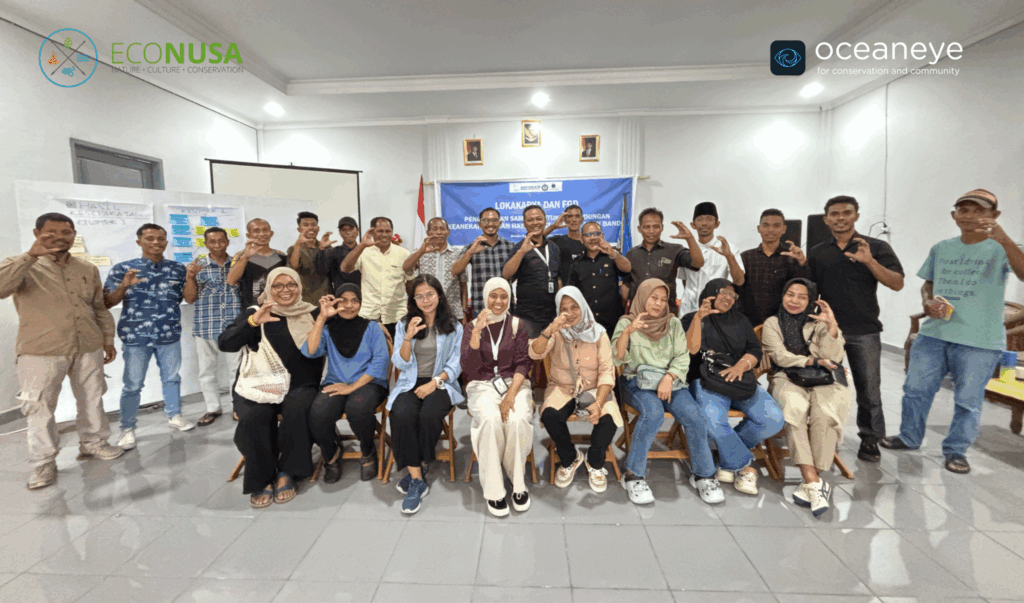
With support from ORRAA through the Government of Canada, Ocean Eye has piloted its solution in four locations in Indonesia (Banda Archipelago, Komodo, Bali, and Raja Ampat), proving the model’s success on the ground. To date, the initiative has trained 66 people in the use of the platform, and raised approximately USD 3,000 in tourist donations. This model connects profit to purpose for the tourism sector and communities, creating long-term value for both people and nature while ensuring transparency and fairness. By collecting real-time data on marine life, Ocean Eye also supports scientific research and management decisions, effectively turning biodiversity into a measurable and investable asset.
Following the successful pilot implementation in Indonesia, Ocean Eye aims to intensify its operations in the first four pilot areas to achieve a greater ecological, social, and economic impact and to reach more communities in these areas.
Looking ahead, the platform is poised for expansion into other high-biodiversity marine areas both within and beyond Indonesia, demonstrating a scalable model for connecting sustainable tourism, conservation, and community prosperity.
“Ocean Eye is one of the most promising innovations in a long-time that can help bring solutions to critical issues of marine wildlife capture and trade from shark finning to unsustainable hunting of all marine species” – Paul Hilton, Conservation Photojournalist